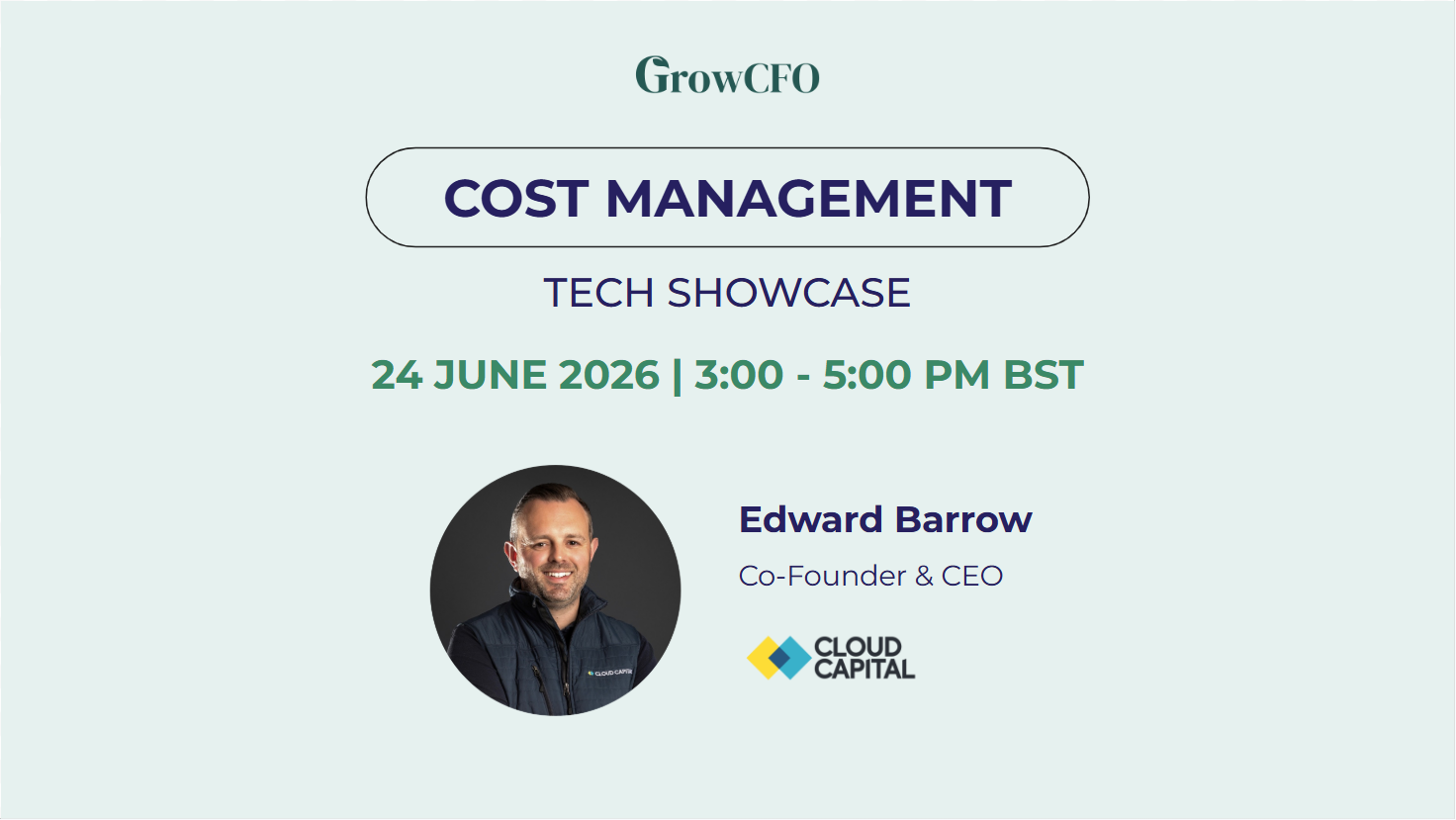
The Cloud Capital segment addresses one of the fastest‑growing lines on modern technology P&Ls: compute and AI costs. Drawing on survey data showing that a quarter of respondents now spend more than 15% of revenue on compute, Edward Barrow, Co‑Founder & CEO of Cloud Capital, frames cloud and AI infrastructure as a strategic cost driver that finance can no longer treat as a purely engineering problem. The session makes the case for shared ownership between finance and engineering, underpinned by a common data model and forecasting capability.
Cloud Capital’s platform is presented as a way to bring real‑time cloud data into the finance lens—mapping spend directly to the P&L, distinguishing production from non‑production environments, and projecting future costs based on business growth and engineering roadmaps. Through a demo, the audience sees how organizations can identify immediate savings, model marginal unit economics, and test different growth and product scenarios. The result is improved predictability, better cross‑functional conversations, and a proactive stance on AI and compute costs before they erode margins.
Highlights:
- Compute and AI as major P&L drivers, with poll data showing rapidly rising spend and a growing impact on gross margin and revenue.
- Joint finance–engineering governance, reframing cloud spend from a technical line item to a shared financial and operational responsibility.
- Real‑time forecasting platform that ingests AWS/Google Cloud data, maps costs to the P&L, and automatically separates production from non‑production spend.
- Business‑driven cost projections, modelling future compute costs against revenue growth, customer volumes and engineering roadmaps.
- Immediate savings levers, including volume discounts, long‑term commitments and a case study demonstrating c.$67k annual savings on a $1m compute bill.
- Scenario modelling by product and growth rate, enabling leaders to understand the cost profile of different product lines and AI initiatives.