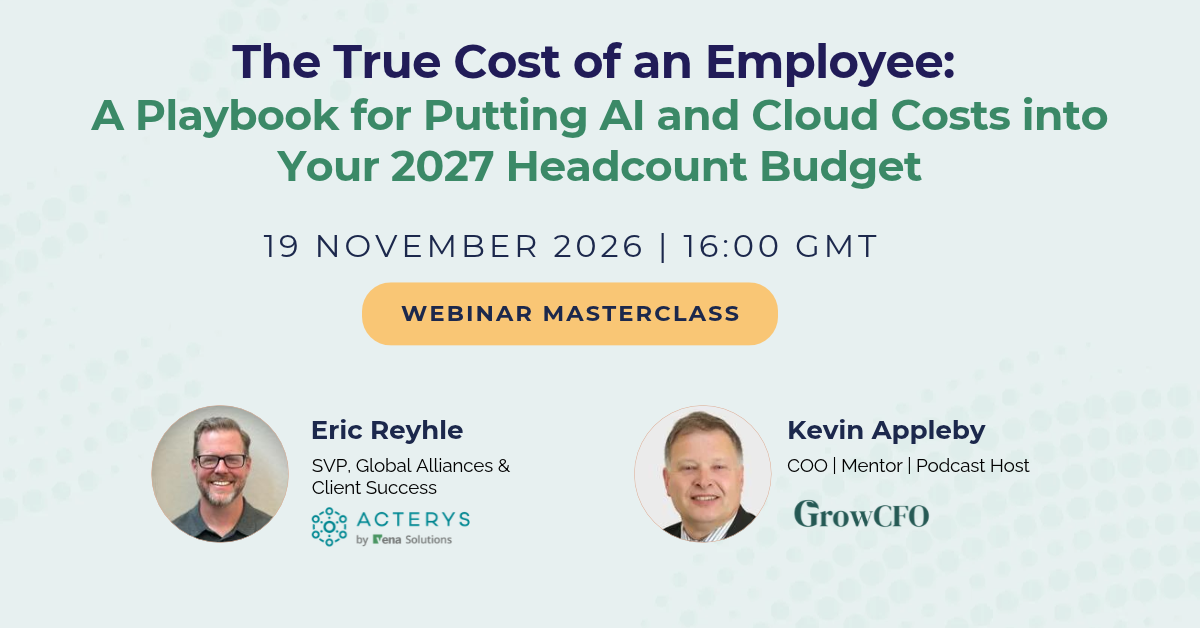
The true cost of an employee: a playbook for putting AI and cloud costs into your 2027 headcount budget

As AI adoption accelerates, employee costs are no longer determined by headcount alone. Traditional budgets can estimate salary, benefits, taxes, office space and fixed software seats, but usage-based AI and cloud consumption can vary widely by team, role and task. That makes forecasting harder and can leave finance leaders exposed to unexpected spend if they do not plan for it.

In this webinar, Kevin Appleby, COO and Podcast Host at GrowCFO, and Eric Reyhle, Senior Vice President, Global Alliances & Client Success at Acterys, outline a practical approach to the “true cost of an employee” in 2027. They present a four-layer cost model and a six-step planning process, emphasizing usage data, departmental cost allocation, clear ownership and forecasts built around cost drivers rather than headcount alone.

Highlights:

  • Traditional employee budgets account for people costs and fixed-seat systems but can miss variable AI and cloud usage.
  • AI costs may vary substantially between individuals and departments; higher usage can reflect valuable work as well as inefficiency or duplication.
  • The four cost layers are people costs, per-seat systems, usage-based AI and cloud consumption, and autonomous agents.
  • Finance and IT need visibility into vendor charges, usage, token consumption and the activities driving costs.
  • The six-step planning approach begins with inventorying systems and cost drivers, separating fixed from variable spend, and improving data and allocation.
  • Forecasting should use historical usage, departmental drivers, cost ownership and scenarios—not rely only on a per-head allocation.
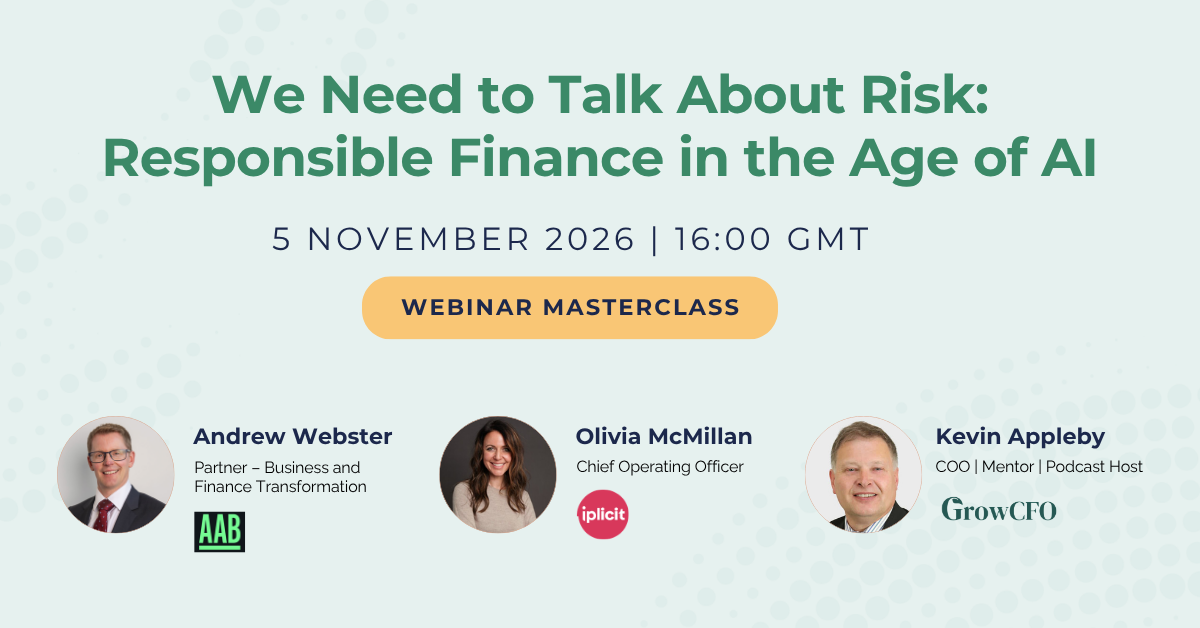
We Need to Talk About Risk: Responsible Finance in the Age of AI

Finance teams are embracing AI, but how can they capture its benefits without compromising accuracy, security, or accountability? Kevin Appleby is joined by Andrew Webster and Iplicit’s COO to discuss responsible AI adoption, practical finance use cases, and the controls that help keep human judgment at the center.

Read More »

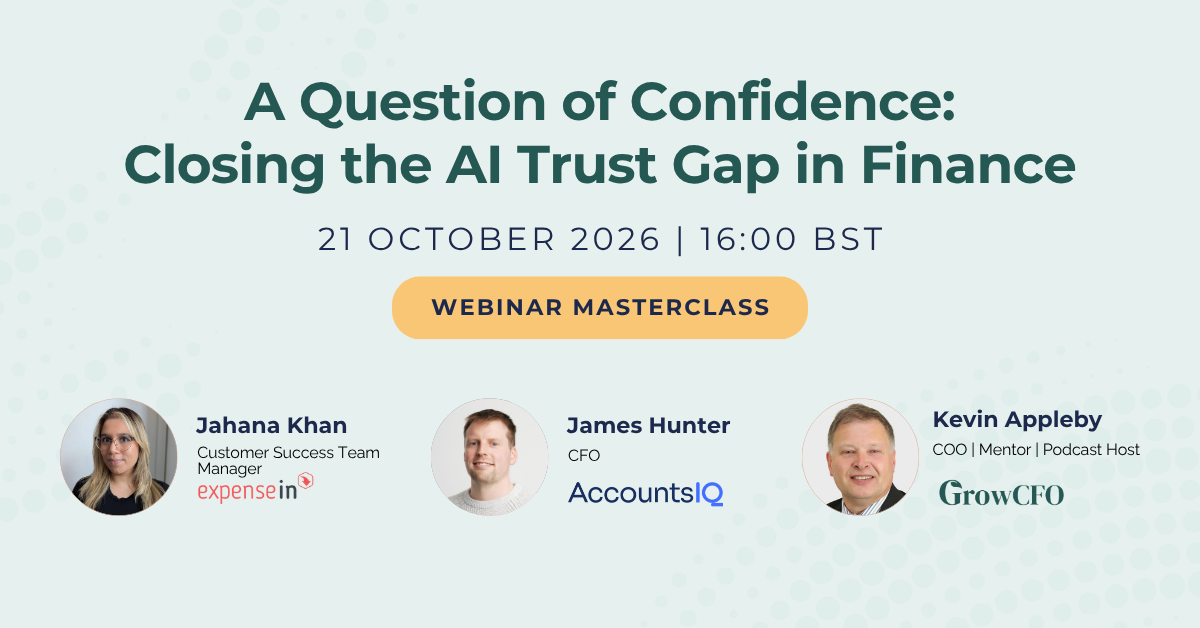
A Question of Confidence: Closing the AI Trust Gap in Finance

Finance leaders are being asked to adopt AI quickly—but confidence in its outputs does not eliminate concerns about over-reliance, data security, and human oversight. In A Question of Confidence: Closing the AI Trust Gap in Finance, Jahana Khan, James Hunter, and Kevin Appleby explore how CFOs can move forward with practical use cases, clear controls, and accountable human review.

Read More »

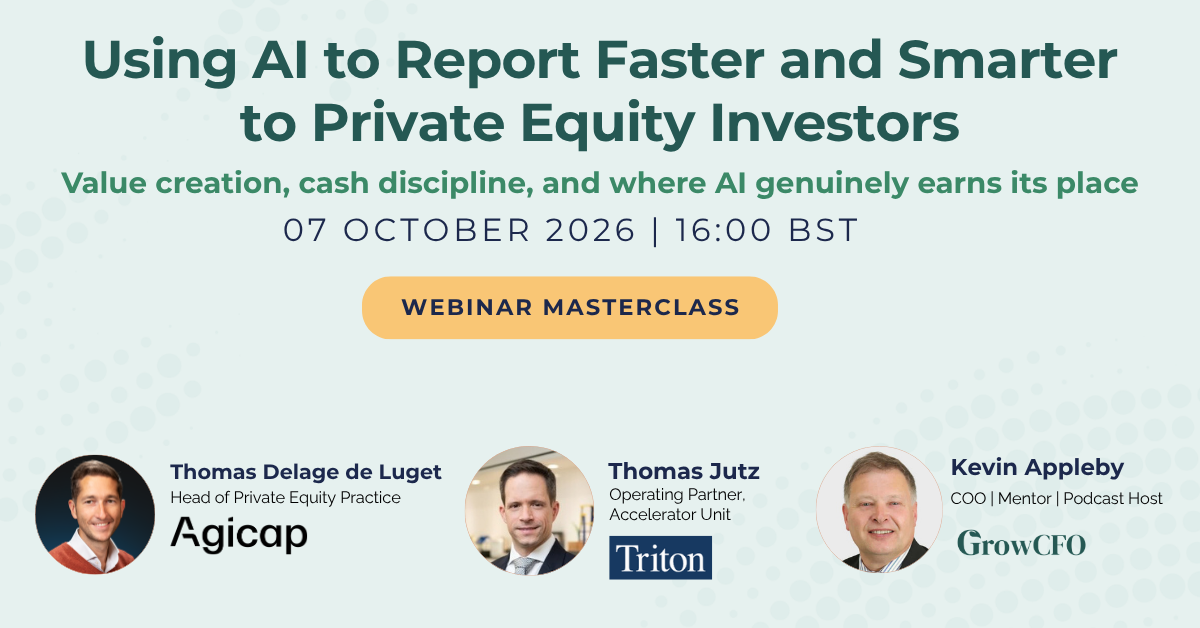
Using AI to Report Faster and Smarter to Private Equity Investors

Thomas Jutz of Triton Partners, Thomas Delage de Luget of Agicap, and Kevin Appleby of GrowCFO discuss how AI can support faster, smarter reporting to private equity investors. The conversation covers data integration, scenario analysis, and practical automation—alongside the need for accurate data and human oversight.

Read More »

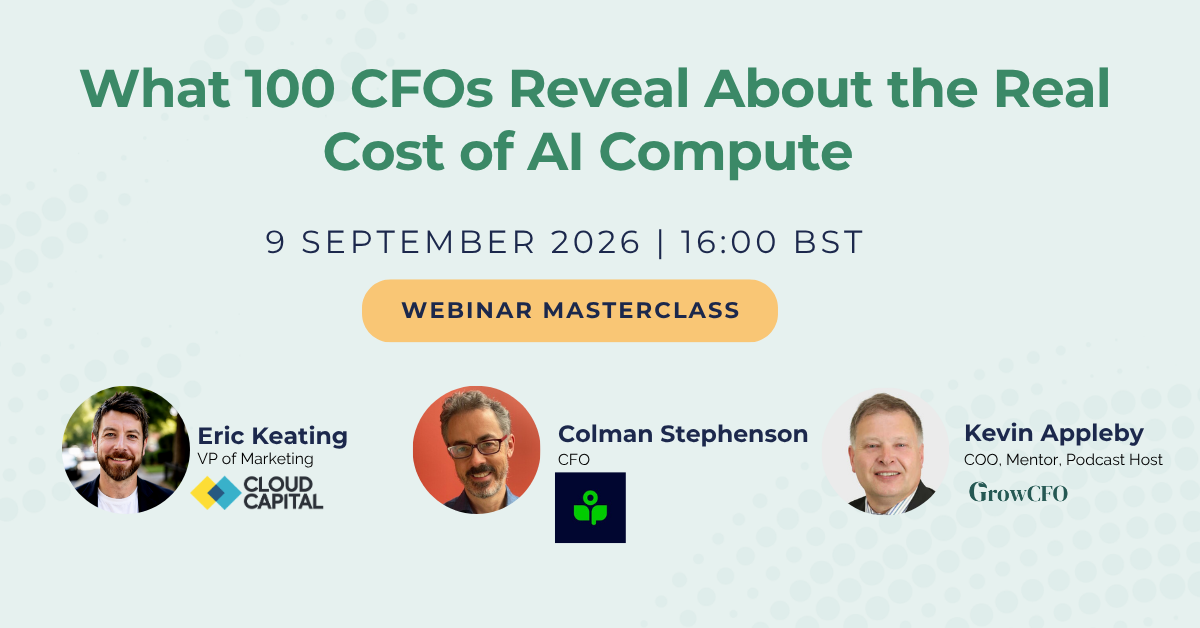
What 100 CFOs Reveal About the Real Cost of AI Compute

In this Cloud Capital and GrowCFO session, Eric Keating, Kevin Appleby and Colman Stephenson unpack new research from 100 CFOs on the real cost of AI compute. They show how AI and cloud infrastructure are reshaping the P&L, why AI‑native businesses are operating with lower gross margins, and how joint finance–engineering ownership, better cost classification and driver‑based modelling can restore visibility, predictability and control.

Read More »